

Did you know that most conventional wheat and lentils on Canadian grocery shelves are sprayed with chemicals just days before harvest?
When you walk down a Canadian grocery store aisle and pick up a bag of conventional lentils or wheat, you likely assume it’s simply food. But what if the crops used to make those staples were intentionally drenched in weed-killers just days before being harvested?
The reality is that the vast majority of conventional wheat and lentils sold in Canada are grown domestically, and in conventional Canadian agriculture, this chemical shortcut is standard practice. It is a process known as "desiccation," and understanding its impact on your health is the key to understanding why choosing organic matters more than ever.

The Race Against Winter
Canadian farmers face a massive challenge: a very short growing season. Crops like lentils, peas, and wheat are notorious for maturing unevenly. One side of a field might be perfectly dry and ready for the combine harvester, while the other side is still green. If a farmer waits for nature to dry the green plants, an early fall snowstorm could destroy the entire crop.
To solve this, conventional agriculture uses chemical shortcuts. Farmers spray the entire field with chemical drying agents (often Diquat or Glyphosate/Roundup) right before harvest. This instantly kills the crop, forcing it to dry out quickly and evenly.
The Health Impact of Chemical Residue
While desiccation makes harvesting incredibly efficient, it comes with a severe hidden cost to the consumer.
Because these chemicals are applied right when the lentil seed or wheat kernel is fully formed, the residue doesn't wash away. It locks directly into the grain that ends up on your dinner plate.
- Glyphosate & The Microbiome: The World Health Organization’s International Agency for Research on Cancer (IARC) has classified glyphosate as a probable human carcinogen. Regular dietary exposure has also been heavily linked to the disruption of the gut microbiome, which controls everything from your immune system to your mental health.
- The "Gluten Sensitivity" Connection: Emerging research points to a fascinating link between this microbiome disruption and the explosion of gluten sensitivity. Because desiccation is so heavily used on North American wheat, the chemical residue left behind can wreak havoc on gut health. We hear this story constantly: many people who grew up in India eating wheat three times a day never had a single stomach issue. Yet, after moving to Canada and eating conventional domestic wheat, they suddenly develop severe digestive sensitivities. While it may not be the only cause, mounting evidence suggests that in many cases, the body isn't actually reacting to the gluten itself—it is reacting to the chemical residue.
- Diquat: Known to be highly toxic, chronic exposure to true chemical desiccants like Diquat puts unnecessary oxidative stress on the body and organs as they constantly work to filter out these unnatural toxins.
The Bloom Organic Promise: Sun-Dried Wheat & Lentils
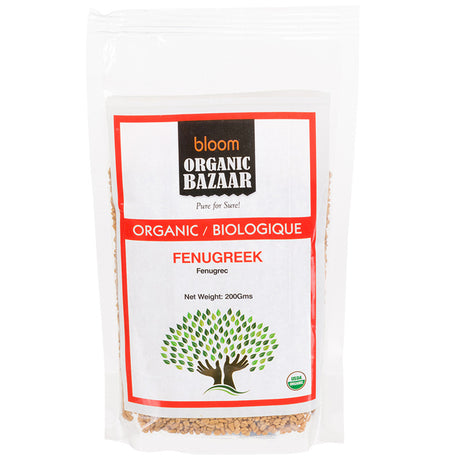
At Bloom Organic Bazaar, we believe that food should heal you, not slowly poison you. We completely reject the use of chemical desiccants, which is why we look beyond the short Canadian growing season for our daily staples.
We proudly partner with traditional organic farmers in India to source 100% of our wheat, lentils, and spices. Instead of forcing a harvest with toxic chemicals, our farmers rely on the naturally hot, long Indian climate. Our crops are given the time they need to mature fully and dry naturally under the sun.
- The Sharbati Wheat Standard: We are incredibly proud to be the only brand offering the prized Sharbati variety of wheat. Widely considered the absolute best wheat for making soft, perfect rotis, it is grown exclusively in specific regions of Madhya Pradesh.
- Naturally Matured Lentils & Dals: We apply the exact same rigorous standards to our lentils. Because our legumes are allowed to dry naturally on the vine without chemical drying agents, they remain nutrient-dense, genuinely clean, and much easier on your digestive system.
Every single harvest of our wheat and lentils is grown strictly without any chemicals or synthetic fertilizers. They are then rigorously tested and certified to meet strict Canadian Organic Standards, proudly carrying the Canada Organic Regime logo.
Yes, farming, certifying, and importing this way requires more effort. But the result is unparalleled quality and peace of mind for your family. You shouldn't have to compromise your gut health for your daily roti and dal.
14 Years of Truly Clean Food For the last 14 years, our mission has remained exactly the same: providing clean, authentic, and safe food to our community. You deserve to know exactly what is in your pantry, and more importantly, what isn't.
Ready to stock up on genuinely clean, naturally sun-dried staples?


Disclaimer: The information provided in this article is for educational purposes only and is not intended as medical advice. Dietary sensitivities, including gluten intolerance and Celiac disease, are complex medical conditions with various causes. If you are experiencing digestive issues, please consult with a qualified healthcare professional. Bloom Organic Bazaar is committed to providing clean, chemical-free food options, but does not claim to cure or treat medical conditions.
Sources & Further Reading on this Topic:
If you would like to learn more about the agricultural practices and health research mentioned in this article, we encourage you to explore the following scientific and agricultural resources:
- On Glyphosate Classification: The World Health Organization’s International Agency for Research on Cancer (IARC) classified glyphosate as "probably carcinogenic to humans" (Group 2A) in 2015 based on epidemiological studies.
- On Desiccation in Canada: The practice of pre-harvest desiccation and the use of chemical drying agents (like Diquat and Glyphosate) on pulses and grains is widely documented and regulated by the Canadian Pest Management Regulatory Agency (PMRA). You can read about standard pre-harvest chemical applications through provincial agricultural resources like the Saskatchewan Pulse Growers or the national Keep It Clean agricultural initiative.
- On Gut Health & Glyphosate: An increasing body of peer-reviewed research hosted on the National Institutes of Health (NIH) / PubMed explores the impact of glyphosate residues on the Shikimate pathway in human gut bacteria, linking chronic exposure to microbiome disruption.